
Life doesn't stop just because you're on unemployment. Maybe your spouse got a job offer three states over. Maybe you need to be closer to aging parents. Or maybe you've realized that the job market in your area just isn't coming back, and you need to go where the work is. Whatever the reason, relocating while you're collecting unemployment benefits is more common than most people think. And it raises a question that a lot of folks find surprisingly hard to answer: what happens to my claim if I move?
The honest answer is that it depends — on where you're moving from, where you're moving to, and how your state handles out-of-area claims. Relocating doesn't automatically kill your benefits, but it can change the rules you have to follow, the amount you receive, and where you file. If you understand the mechanics before you pack the first box, you can avoid some expensive mistakes. Let's walk through how this actually works, starting with the biggest misconception out there.
Does Relocating Automatically Disqualify You?
No. This is probably the most common fear people have, and it's simply not true. Moving to a new address — even in a different state — does not automatically terminate your unemployment claim. Your benefits are based on the work you already did and the wages you already earned in your base period. The state where you worked and paid into the system owes you those benefits regardless of where you currently live.
That said, moving can trigger a chain of events that affects your claim in practical ways. Your job search requirements might change. Your weekly certification process could get more complicated. And if you're moving to a state with different rules about what counts as an active work search, you could find yourself scrambling to meet a standard you didn't know existed. The key is understanding the eligibility requirements in both your old and new locations before you make the move.
Where people get into real trouble is by not reporting the relocation at all. If you move and keep certifying as if you still live at your old address, that's fraud. States do catch this — sometimes through address verification systems, sometimes through employer cross-references, and sometimes through an audit that happens months or even years later. The result is an overpayment notice demanding you return every dollar you received after the move, plus potential penalties and disqualification from future benefits. Don't let this happen to you.
Moving Within the Same State vs. Moving to a Different State
These are two very different scenarios, and it's worth understanding the distinction clearly. If you're moving within the same state — say, from Cleveland to Cincinnati, or from Sacramento to San Diego — your claim stays exactly where it is. You're still filing with the same state agency, under the same rules, with the same benefit amount. The only thing that changes is your mailing address and possibly your local American Job Center location for in-person services.
Most states make it easy to update your address online or by phone. You log into your claim portal, change the address, and keep certifying as normal. Some states may ask you to re-register with a local workforce office in your new area, especially if they require in-person check-ins. But the claim itself, your weekly benefit amount, and your maximum benefit duration all remain the same.
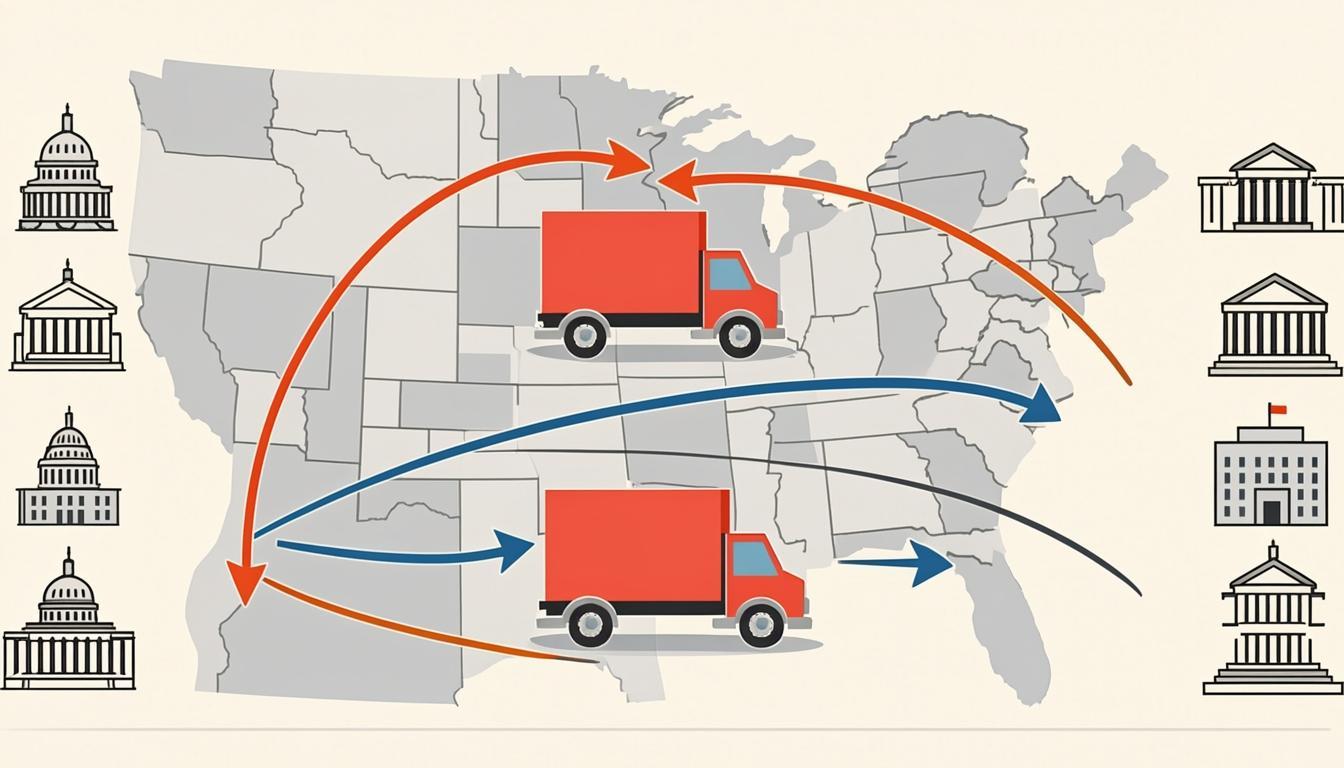
Moving to a different state is where things get interesting. You're still entitled to collect benefits based on the wages you earned in your original state. But now you're living somewhere else, and that new state has its own unemployment agency, its own rules, and its own systems. You can't just keep clicking "certify" on the old state's website as if nothing happened. Depending on the circumstances, you'll either continue your claim in the original state under an interstate arrangement or file a new claim in the new state using your old wages. This is where collecting from another state rules come into play.
How Job Search Requirements Change After Relocating
This is one of the most important things to understand, and it's where a lot of people accidentally disqualify themselves. When you relocate, your job search requirements shift to your new area. You can't keep applying for jobs back in your old city — not as your primary search, anyway. The state expects you to be looking for work where you actually live now.
Most states require you to register for work in your new area and conduct a minimum number of job search activities each week. Some states accept online applications as valid work search activities, while others want you to show in-person contacts or networking efforts. If you move from a state with lenient requirements to one that's more strict, you need to adapt quickly. Failing to meet the new state's job search requirements is one of the fastest ways to lose your benefits.
Here's a practical example. Suppose you were collecting unemployment in Florida, which requires five work search actions per week, and you move to Oregon, which may have different requirements and a different system for tracking them. You can't just keep logging five Florida-based applications. You need to understand what Oregon expects and start meeting those standards immediately. The agency handling your claim — whether it's still Florida or now Oregon — will expect your work search to reflect your current location.
Some states are more flexible than others about this transition period. A few will give you a week or two to get registered in the new area. But don't count on that grace period. Ask before you move, and have a plan for how you'll meet the new requirements from day one in your new location.
Do You Have to Reregister With the New State?
In most cases, yes — at least to some degree. If you've moved to a new state, you'll typically need to register for work with the workforce agency in that state. This is separate from your unemployment claim itself. It's about being listed as an active job seeker in the local system. Most states require this registration as a condition of receiving benefits, and if you don't do it, your payments can stop.
The registration process varies by state. Some states have a simple online form that takes ten minutes. Others want you to visit an American Job Center in person and meet with a counselor. A few states combine the registration with your unemployment claim filing, so you handle it all at once. The point is, you need to find out what the new state requires and get it done promptly. Delays in registration can mean delays in your payments.
If you're continuing your claim in your original state under an interstate agreement, the original state will usually coordinate with the new state's workforce agency. But you're still responsible for making sure the registration actually happens. Don't assume the two agencies are talking to each other efficiently — government coordination isn't exactly famous for being seamless. Take the initiative, make the calls, and confirm that your registration is complete. After after you file, staying on top of these administrative details is what keeps your payments flowing.
What Happens to Your Benefit Amount When You Move
Your weekly benefit amount is determined by the wages you earned during your base period and the formula used by the state where you file. Here's the critical point: moving doesn't change the wages you earned. Those are locked in. But it can change the formula that's applied to those wages if you end up filing through a different state's system.
If you keep your claim in your original state — which is the most common scenario for people who relocate — your benefit amount stays the same. You earned the wages in State A, State A approved your claim, and State A pays you according to its own formula. Moving to State B doesn't change that calculation.
However, there's a less common scenario where things can shift. If your benefit year in the original state expires and you haven't exhausted your benefits, some states allow you to file a new claim in your new state of residence using the wages from the original state. This is called an interstate wage combination claim. The new state applies its own formula to your out-of-state wages, and that formula might produce a different weekly amount — higher or lower depending on the state. Understanding how benefit amount calculation works in both states will help you anticipate any changes.
The maximum benefit duration can also differ. Some states offer up to 26 weeks of benefits, while others provide fewer. If you're collecting under an interstate arrangement, the paying state's rules generally govern your maximum duration. But if you transition to a claim in the new state, that state's limits apply. It's not always obvious which set of rules controls your claim, so ask specifically when you contact the unemployment office.
Reporting Your Relocation on Weekly Certification
This is where honesty isn't just the best policy — it's the only policy that won't get you in trouble. When you certify for benefits each week, most states ask whether anything has changed about your situation. A change of address is absolutely something you need to report. Some states have a specific question about whether you've moved. Others expect you to update your address through your online portal before certifying.
If you've moved to a new state, you should report that immediately — not at the end of the month, not when you get around to it, but during the very first certification after your move. Failing to report a change of residence can be treated as misrepresentation, which carries the same penalties as failing to report income: overpayment demands, monetary penalties, and potential disqualification from future claims. It's not worth the risk, especially when the fix is as simple as answering a question honestly.
When you report the move, the agency may ask additional questions: Why did you relocate? Did the move affect your ability to work? Are you registered for work in the new area? Answer these truthfully and thoroughly. A relocation for valid reasons — following a spouse's job, moving to an area with better employment prospects, family medical needs — is generally not a problem. What could be a problem is if the agency suspects you moved to an area with no job opportunities and aren't genuinely seeking work. That's why registering for work and documenting your job search in the new location is so important.
Good Cause for Refusing Local Work After Relocating
One concern that comes up a lot: what if you move and someone offers you a job that doesn't make sense for your situation? Maybe it pays significantly less than your previous position, or it's completely outside your field, or it requires a two-hour commute each way. Do you have to take it, or can you turn it down without losing your benefits?
The answer depends on whether you have "good cause" to refuse the offer. Each state defines good cause differently, but common reasons include wages substantially below your previous earnings (usually less than 70-80% of your prior wage), work that's outside your normal occupation and skill level, unreasonable commuting distances, and working conditions that are unsafe or illegal. If you have good cause, refusing the job shouldn't disqualify you. Understanding when you can refuse work is covered in detail in our article about refusing a job offer while on unemployment.
After you relocate, the standard for what counts as "suitable work" may shift. In your old area, a 45-minute commute might have been normal. In your new area, if comparable jobs are available closer to home, that same 45-minute commute might no longer be considered reasonable. The unemployment office will evaluate job offers based on your new local context, so the definition of suitable work can actually work in your favor after a move.
The flip side is that you need to be realistic. If you've moved to a new area and there's work available in your field at a reasonable wage, you can't keep holding out for something better indefinitely. Most states give you some flexibility in the early weeks of your claim, but as time goes on, the bar for what counts as suitable work lowers. A job you could refuse in week three might be considered suitable in week twenty. Keep this in mind as you plan your job search strategy.
Timing: When to File in the New State vs. Keeping Your Old Claim
This is one of the most consequential decisions you'll make, and it depends heavily on timing. If you have an active claim in your original state with significant benefits remaining, it usually makes sense to keep that claim alive rather than starting fresh in the new state. Your existing claim is already approved, your benefit amount is set, and you're just changing the address and job search area. Starting over in a new state means a new application, a new determination process, and potentially a different benefit amount.
The interstate benefit payment system exists precisely for this situation. Under this system, the state that holds your original claim continues to pay you, but the state where you now live handles certain administrative functions like work search monitoring and job referrals. It's not always seamless — there can be delays and miscommunications between the two agencies — but it's generally the best option when you have a lot of benefits left on your existing claim.
Where it might make sense to file in the new state is if your original claim is close to exhausting its benefits, or if your benefit year is about to expire. In that case, the new state can use an interstate wage combination to build a new claim based on your earnings from the original state. This might result in a higher or lower weekly amount depending on the new state's formula, but it gives you a fresh benefit year and potentially additional weeks of coverage. Learning about benefits duration in both states will help you make the right call.
There's no universal right answer here. It depends on your specific numbers — how many weeks you have left, how much you're receiving per week, and what the new state would offer based on the same wages. Before you move, it's worth calling the unemployment office in both states and asking them to walk you through the options. A half-hour phone call can save you thousands of dollars in lost benefits. You can also check your claim status online to see exactly where you stand before making any decisions.
One more timing consideration: don't wait until you've already moved to figure this out. The week between when you stop certifying in your old state and when you're set up in the new state is a week with no income. Plan ahead. Make the calls, understand the process, and have everything lined up so there's no gap in your payments. If you need to apply for benefits online in the new state, you can often start that process before you've physically moved.
Also keep in mind that if you're working part-time while collecting, your move might affect those arrangements too. If your part-time job is in the old state, you'll lose that income when you move. Make sure you understand the full financial picture before relocating.
Frequently Asked Questions
Can I keep collecting unemployment if I move to a state with lower benefits? Yes. If you're keeping your claim in the original state, your benefit amount is based on that state's formula and your wages — not on where you currently live. The new state's lower benefit rates don't affect you unless you file a new claim through that state. Your original state will continue paying you at the rate they determined, regardless of your new address. However, if your benefit year expires and you need to refile using the new state's system, then the lower rates would apply. Understanding disqualifying factors in the new state is also important since those rules could affect your ongoing eligibility.
Do I need to tell my unemployment office about my move before it happens? It's a good idea, though not always strictly required. Telling them in advance gives you time to understand what changes, set up your job search registration in the new area, and avoid any surprises that could interrupt your payments. Some states may want to know the date of your move so they can update your records proactively. Others won't do anything until you actually certify with the new address. Either way, being proactive beats being reactive. Call the claims center, explain your situation, and ask what they need from you. You can also reopen your claim if anything goes wrong during the transition, but it's much easier to keep it active throughout.
What if I move back to my original state — can I resume my old claim? In most cases, yes. If your claim is still within the benefit year and you haven't exhausted your maximum benefit amount, moving back should be relatively straightforward. You update your address again, adjust your job search to the original area, and continue certifying. If your claim went inactive because you stopped certifying during the move, you may need to reactivate it, but that's usually a simple process — a phone call or an online request. The important thing is that moving back doesn't erase your claim or your remaining balance. Those benefits are yours as long as you're still eligible and within the benefit year.
Disclaimer: This article provides general information about how relocating affects unemployment benefits. Interstate unemployment rules, benefit calculations, and job search requirements vary significantly by state and are subject to change. Always verify current rules with the unemployment agencies in both your current and new states before relocating.