
If you work in a school, you already know the drill. Summer rolls around, the paychecks stop, and suddenly you're staring at two or three months with no income. It's a gap that most private-sector workers never experience. And naturally, a lot of teachers and school staff wonder whether unemployment benefits can fill that void. The short answer is: it's complicated. The longer answer is what this entire article is about.
The unemployment system wasn't really designed with school employees in mind. Most workers either have year-round jobs or get laid off with no expectation of returning. School employees are different. You have a contract, you expect to come back in the fall, and the state sees that expectation as a reason to deny your claim. But that doesn't mean nobody in education qualifies. Support staff, adjunct professors, and certain non-contracted employees can and do collect benefits between terms. Understanding eligibility requirements for school employees requires digging into rules that most people have never heard of.
Why Teachers Face Unique Unemployment Challenges
Most workers in the United States are employed at-will. They can quit or be fired at any time, and if they lose their job through no fault of their own, they can apply for unemployment. Teachers and many school employees don't fit neatly into that framework. You're typically working under a contract that runs for the academic year, and that contract includes an expectation — sometimes explicit, sometimes implied — that you'll return the following year.
That expectation is the root of the problem. Unemployment benefits are designed for people who are genuinely out of work and actively seeking employment. If the state believes you have a job waiting for you when the next term starts, they don't consider you unemployed in the way the system defines it. You're more like someone on a scheduled break than someone who's lost their livelihood. Whether that's fair is a whole different conversation, but it's how the law works in most states.
The academic calendar creates another wrinkle. Your employment isn't continuous — it's broken into semesters, quarters, and summer breaks. Most workers either work year-round or get permanently laid off. School employees fall into a gray area where they're technically still employed but not receiving wages. This limbo status makes it hard to fit into standard seasonal employee rules, even though the situation feels similar.
The “Reasonable Assurance” Problem
Here's the phrase that derails more teacher unemployment claims than anything else: "reasonable assurance." Under federal law, specifically the Federal Unemployment Tax Act (FUTA), a school employee cannot collect unemployment between academic terms if they have reasonable assurance of returning to work in the next term. Reasonable assurance doesn't have to be a formal contract. It can be a letter from your district saying they expect to offer you a position, a verbal commitment, or even a longstanding practice of rehiring all returning staff.
This rule hits contracted teachers the hardest. If you signed a contract for the 2026–27 school year before the 2025–26 year ended, you almost certainly have reasonable assurance. The district has essentially promised you a job, and the unemployment office will see that promise as disqualifying. It doesn't matter that you won't receive a paycheck over the summer. The state's position is that you have employment waiting, so you're not truly unemployed.
The reasonable assurance standard is lower than most people think. You don't need a signed contract to trigger it. In some states, a history of being rehired year after year is enough to establish reasonable assurance. A principal telling you "we'll see you in September" can count. Even the absence of a layoff notice — when other staff received RIF (reduction in force) notices — can be interpreted as assurance that you'll return. Understanding disqualifying factors like this one is critical before you file.
Which School Employees Can Actually Qualify?
Despite the reasonable assurance roadblock, not everyone who works in a school is automatically denied. The key factor is whether you have a guaranteed position waiting for you. If you don't, you may qualify just like any other unemployed worker. The categories of school employees most likely to receive benefits include those without contracts, those whose positions are being eliminated, and those who work on a term-by-term basis.
Substitute teachers are often the strongest candidates. Most subs don't have contracts, don't receive any assurance of future work, and are genuinely unemployed between assignments. If a substitute teacher in Ohio or Michigan applies for benefits during a period when no sub assignments are available, they have a legitimate claim. The same goes for paraeducators or teaching assistants who are hired semester-to-semester with no guarantee of continuation.
Adjunct professors at community colleges and universities face a particularly tough version of this problem. Many adjuncts are hired course by course, semester by semester, with no guarantee that their classes will run or that they'll be assigned to teach again. In states like California and New York, adjuncts frequently qualify for unemployment between semesters because they lack reasonable assurance. But this is a hard-won right in some places — the California Employment Development Department has been sued multiple times over improper denials of adjunct claims, and the rulings have generally favored the instructors.
Support staff — bus drivers, cafeteria workers, custodians, and administrative assistants — fall somewhere in the middle. If your district routinely rehires all support staff and communicates that to you before the break, you'll probably be denied. But if you're told your position might not be available, or if your hours are being reduced, you may have a valid claim. It depends heavily on the specific facts of your situation and the state you're in. If you're thinking about filing your claim, be prepared to explain exactly why you don't have assurance of returning.
State Variations in School Employee Claims
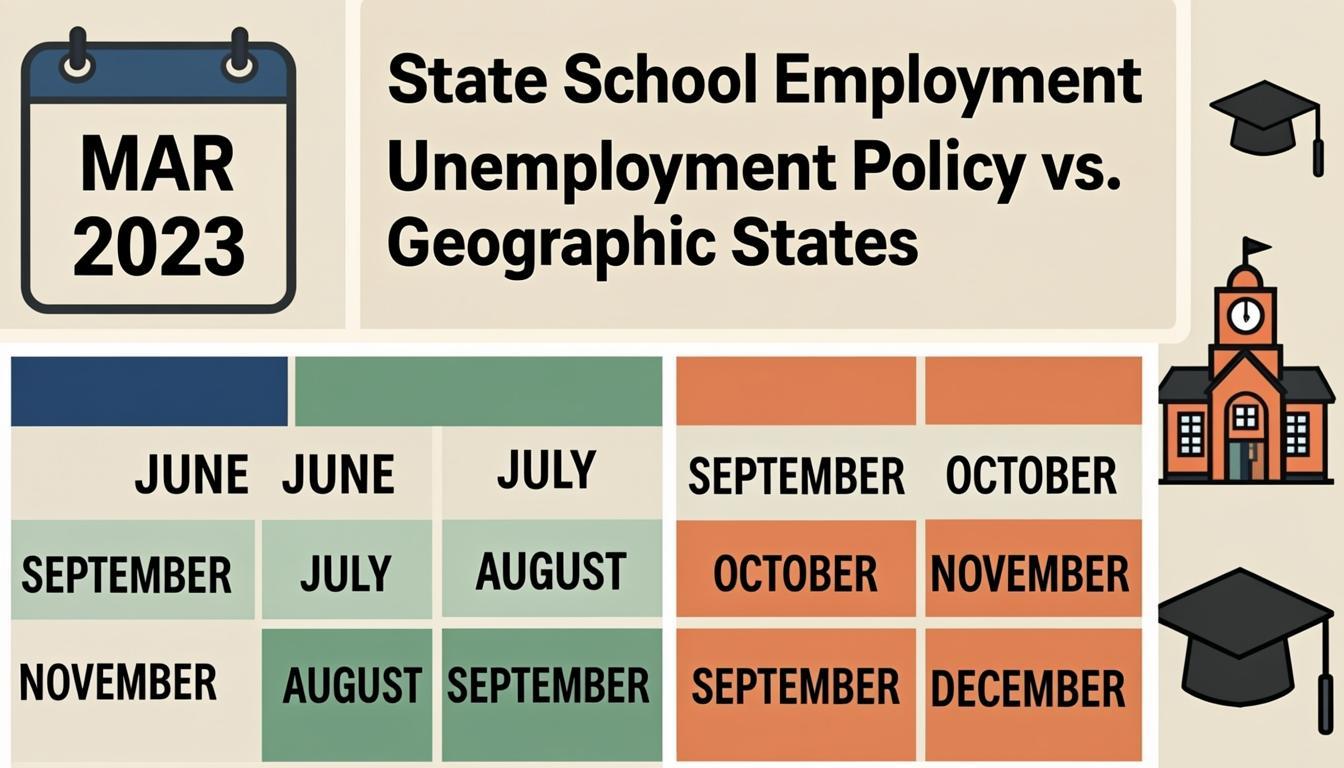
This is where things get really messy. The reasonable assurance rule comes from federal law, but each state implements it differently. Some states are strict — they'll deny any school employee who has even a verbal indication of returning. Others are more lenient and require formal, written assurance before denying a claim. The practical result is that a cafeteria worker in Pennsylvania might qualify while a similarly situated worker in Virginia gets denied.
New York is generally considered one of the more favorable states for school employee claims, especially for non-instructional staff. The state examines whether you have a "reasonable expectation" of continued employment, and they apply a fairly rigorous standard to that determination. Texas, on the other hand, tends to interpret reasonable assurance broadly and denies most school employee claims between terms. Illinois falls somewhere in between, with the Department of Employment Security evaluating each claim on its individual facts.
California has developed specific guidance for school employees through a series of precedential decisions. The EDD looks at whether the school has formally offered you a position for the next term. If they haven't, and you're not under a continuing contract, you may qualify. Washington state follows a similar approach. The bottom line is that you need to understand your own state's rules before assuming you'll be denied — or before assuming you'll qualify. When you apply online, the questionnaire will ask about your employment status and whether you expect to return, so answer carefully.
Summer Break vs. Between-Semester Rules
There's an important distinction between summer break and the shorter gaps between fall and spring semesters. Summer break is the longest period without pay, typically 8 to 12 weeks, and it's where most school employees would theoretically need benefits the most. But it's also where the reasonable assurance rule hits hardest, because most districts have already committed to staffing for the upcoming year by late spring.
Winter break and spring break are different. These are typically one to two weeks, and most school employees don't even think about filing for unemployment during such short periods. But the gap between fall and spring semesters at colleges and universities can be four to six weeks, and that's a period where adjunct faculty and other term-by-term employees may genuinely need income support. The rules apply the same way regardless of the break length — reasonable assurance during any between-term period can disqualify you — but shorter breaks are less likely to trigger a claim in the first place.
If you're a school employee who actually does get laid off during the academic year — not between terms, but mid-year due to budget cuts or program changes — that's a completely different situation. A mid-year layoff means you don't have reasonable assurance because your position is being eliminated. You should qualify for benefits just like any other laid-off worker. Don't let the school employee rules discourage you from filing if you've genuinely lost your job. Understanding benefits duration can help you plan if you're facing a mid-year layoff.
What to Do If Your Claim Is Denied
Getting denied because of reasonable assurance is extremely common, and it's not the end of the road. You have the right to appeal, and a surprising number of appeals are successful. The key is understanding why you were denied and whether the denial was actually correct. Many school employees are denied automatically because the unemployment system flags any claim from a school district employer. That automatic flag doesn't necessarily mean the denial is proper for your specific situation.
When you appeal, you'll have a hearing before an administrative law judge. This is your chance to explain why you don't have reasonable assurance of returning to work. Bring any evidence you have — letters saying your position won't be renewed, documentation that your contract was non-continuing, proof that other staff in your position were not rehired. The more specific you can be, the better. Saying "I'm not sure if I'll have a job" is much weaker than presenting a letter from your principal stating that your position has been eliminated.
Timing matters here. File your appeal as soon as you receive the denial notice. Most states give you 10 to 30 days to appeal, and missing that deadline can cost you your chance entirely. During the appeal process, continue certifying for benefits every week. If you win the appeal, you'll receive back pay for the weeks you certified. If you stop certifying, those weeks are gone even if your appeal succeeds. Our appeal the denial guide walks through the hearing process in detail.
Strategies for School Employees to Maximize Benefits
If you're a school employee who does qualify for unemployment, there are several strategies that can help you get the most from your claim. The first is to file as early as possible. Don't wait until you've been off work for three weeks to submit your application. File during the first week you're unemployed. The waiting period (which most states require) starts from your filing date, so delaying just pushes your first payment further out.
Second, if you have the option to work part-time during the break, do it — but report your earnings accurately. Most states allow you to earn some income while collecting unemployment, typically up to a certain percentage of your weekly benefit amount. Working a few hours a week at a summer camp or as a tutor can supplement your unemployment without disqualifying you entirely. Just be meticulous about reporting every dollar. Our guide on working part-time while on unemployment explains the earnings disregard rules state by state.
Third, understand how your benefit amount is calculated. Your weekly benefit is based on your earnings during a base period, which is typically the first four of the last five completed calendar quarters before you file. For school employees, this can create complications because your income is concentrated during the academic year. If you file during the summer, your base period might not capture your most recent months of work. Learning how benefit amount calculation works will help you predict what to expect.
Finally, keep meticulous records. Save your employment contract, any correspondence about your employment status for the upcoming term, pay stubs, and anything else that documents your work situation. If your claim is denied and you need to appeal, documentation is your strongest weapon. Schools and districts have HR departments and legal counsel on their side. You need evidence, not just your word.
Reporting School Employee Income on Your Claim
When you file for unemployment, you'll need to report your income from your school employment. This sounds straightforward, but school pay structures can make it confusing. Many teachers and school employees have their annual salary spread over 12 months even though they only work 10. Others opt for 10-month pay and receive nothing during the summer. How you report your income depends on which pay structure you have.
If you're on a 12-month pay cycle, you receive checks during the summer even though you're not working. Those checks are considered wages for work already performed, and they can complicate your unemployment claim. Some states treat them as earnings that reduce your weekly benefit, while others recognize them as deferred compensation for work already done and don't count them against you. This is a state-specific distinction that you need to verify with your local unemployment office. Getting this wrong can lead to an overpayment demand months later.
If you're on a 10-month pay cycle, the situation is simpler. You have no income during the summer, so there's nothing to report as earnings. But you still need to accurately report your employer, your dates of employment, and the reason you're currently not working. Saying you were "laid off" when you actually have a contract for next year can get you in serious trouble. Be honest and let the system determine your eligibility based on the real facts.
Adjunct faculty face an additional reporting challenge. If you teach at multiple institutions, you need to report all of them as employers. If one college didn't renew your contract but another did, your claim will be evaluated based on the combined picture. You might be partially eligible — receiving benefits based on the lost position while your continued employment at the other college reduces your weekly amount. This gets complicated fast, and it's worth weekly certification guidance if you're in this situation.
Frequently Asked Questions
Can a tenured teacher ever qualify for unemployment between academic terms? In almost all cases, no. Tenure provides the strongest form of reasonable assurance because it guarantees your position unless you're terminated for cause or the district undergoes a reduction in force. If you're a tenured teacher who hasn't been laid off, you won't qualify between terms. The only exception would be if your district formally eliminates your position or announces a RIF that includes you — in which case you'd file based on the layoff, not the break between terms. If you're unsure whether your situation counts, read up on who qualifies for benefits in general.
I'm a paraprofessional and my district said they “probably” will rehire me. Is that reasonable assurance?Probably, yes — and that "probably" is doing a lot of work. Most states interpret "probably" as sufficient assurance to deny a claim. The logic is that if your employer expects to rehire you, you're not genuinely unemployed. But the word "probably" isn't a guarantee, and some states — particularly those with more employee-friendly unemployment systems — may evaluate this more carefully. If your district said "probably" but didn't give you a formal offer or contract, it's worth filing and seeing what happens. If you're denied, you can appeal the denial and argue that "probably" doesn't meet the legal standard of reasonable assurance.
What if I didn't get my contract renewed and then found out my position was given to someone else?This is one of the strongest cases for eligibility. If your contract wasn't renewed and your position was filled by someone else, you have no reasonable assurance of returning to work. You should qualify for unemployment benefits. File immediately, and if you're denied (which sometimes happens due to automatic school-employee flags), appeal with documentation showing that your position was given to another person. This is essentially a layoff, and you should be treated like any other laid-off worker. If you quit your job voluntarily, that's different — but a non-renewal where your position is filled by someone else is not a voluntary quit.
Disclaimer:This article provides general information about unemployment benefits for teachers and school employees. Reasonable assurance rules, state-specific provisions, and appeal procedures vary significantly and are subject to change. Always verify current rules with your state's unemployment agency before filing a claim.