
When your employer shuts its doors for good, the stress hits hard and fast. You've lost your income overnight, your health insurance is probably gone, and nobody from HR is around to answer your questions because they're out of a job too. It's a mess. But here's the thing most people don't realize right away: yes, you can usually get unemployment benefits when your company goes bankrupt or closes. In fact, a business closure is one of the clearest-cut situations where workers qualify, because you lost your job through no fault of your own.
That doesn't mean the process is simple. Bankruptcy and closure create unique complications that a regular layoff doesn't. Your employer might not be around to verify your wages. You might not get your final paycheck on time. There could be severance, WARN Act violations, or a confusing tangle of Chapter 7 versus Chapter 11 proceedings. This guide walks you through all of it so you know exactly what to expect and what to do. If you want to review the baseline rules first, our guide on eligibility requirements covers the fundamentals that apply to every claim.
Yes, You Can Usually Get Unemployment
Let's start with the most important point. When a company closes its doors, whether through bankruptcy or simply shutting down, the employees who lose their jobs are generally eligible for unemployment benefits. The reason is straightforward: unemployment insurance is designed for exactly this situation. You became unemployed through no fault of your own. You didn't quit. You weren't fired for misconduct. The business failed, and you got caught in the fallout.
Most states treat a company closure as a qualifying event, and your claim typically moves through the system without the kind of scrutiny that comes with a contested termination. There's no employer around to argue that you were fired for cause. There's no debate about whether you resigned voluntarily. The separation reason is clean. That said, you still need to meet your state's monetary eligibility requirements, which usually means you earned enough during your base period. If you were a very recent hire or worked only a few hours, you might not qualify on those grounds. For a full breakdown of what the system requires, see our guide on who qualifies for benefits.
One thing that catches people off guard is how quickly they need to act. Even though your employer is gone, the unemployment office still expects you to file promptly. Waiting weeks or months because you assumed it would be complicated is a mistake. You can always provide additional wage documentation later, but you can't get benefits for weeks that pass before you file. If you're unsure about timing, our guide on whether you can backdate your claim explains the rules around late filings.
Chapter 7 Liquidation vs. Chapter 11 Reorganization
Not all bankruptcies are the same, and the type your employer files makes a real difference for your unemployment claim. Chapter 7 bankruptcy is a liquidation. The company is shutting down permanently. A court-appointed trustee sells off assets, pays creditors what they can, and the business ceases to exist. For employees, this is the clearest situation. Your job is gone, and it's not coming back. You file for unemployment, and your claim proceeds like any other closure.
Chapter 11 is different. This is a reorganization, where the company is trying to restructure its debts and stay in business. Under Chapter 11, the company keeps operating while it works out a plan with its creditors. Some employees may be laid off as part of the restructuring, while others keep their jobs. If you're laid off during a Chapter 11 proceeding, you're eligible for unemployment just like any other laid-off worker. The complication comes if the company later closes anyway after failing to reorganize, in which case remaining employees join the ranks of the unemployed too.
There's also a scenario where a company files Chapter 11, lays off a bunch of workers, and then emerges from bankruptcy and starts hiring again. If that happens and you're on unemployment, you may be called back or offered your old job. Refusing a suitable offer from your former employer can jeopardize your benefits. The key word is "suitable" — the offer needs to be comparable to your previous position in terms of pay and conditions. This gets complicated in bankruptcy situations because wages and terms at the reorganized company might be different. Understanding how termination benefits work in different scenarios can help you navigate these gray areas.
What Happens to Your Claim When the Employer Goes Under
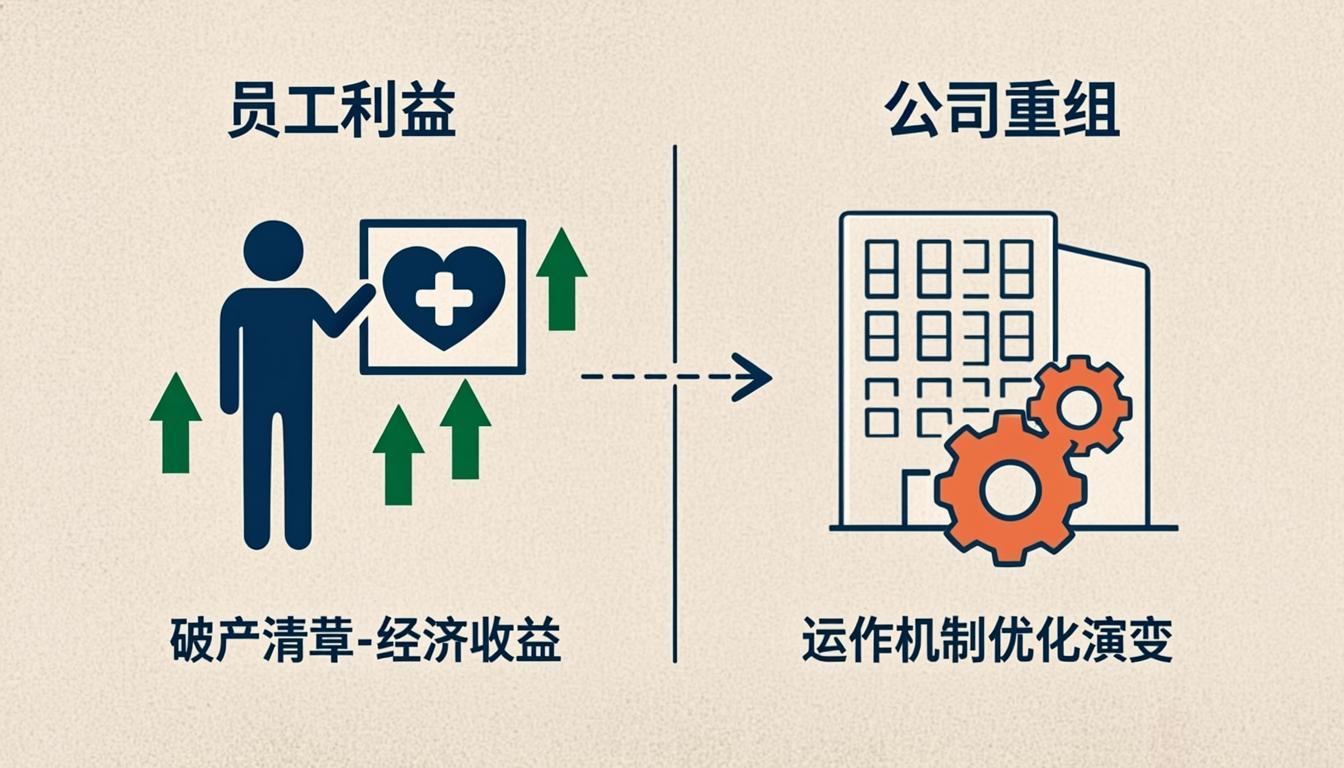
Normally, when you file for unemployment, the state contacts your employer to verify the reason for separation and your wage history. The employer has a chance to contest the claim, though most don't bother for legitimate layoffs. When the employer is bankrupt or closed, this step gets disrupted. The state sends a notice to the company's last known address, and it goes unanswered. In most cases, the unemployment office simply moves forward without the employer's response.
An unanswered employer notice doesn't automatically mean your claim is approved, but it works heavily in your favor. Without the employer contesting the separation reason, the agency relies on your statement about what happened. If you say the company closed and you were laid off, and there's no employer to contradict you, the agency will typically accept your account. This is one of the few situations where a missing employer actually simplifies things rather than creating problems. Of course, you still need to prove your earnings, which is a separate challenge we'll get to next.
There is one wrinkle worth knowing about. Sometimes a bankrupt company's bankruptcy trustee or legal representative does respond to the unemployment office's inquiry. They're not contesting your claim — they're just confirming the closure and the dates of employment. This can actually help your case because it provides official third-party confirmation of your separation. Either way, the process moves forward. If you want to understand what happens step by step after you submit your application, our guide on what happens after you file lays it all out.
Proving Your Earnings Without Employer Cooperation
Here's where things can get tricky. Your unemployment benefit amount is based on your earnings during the base period, which is usually the first four of the last five completed calendar quarters before you file. Normally, the state pulls this information from quarterly wage reports that your employer submitted. But when a company goes bankrupt, those reports might be late, incomplete, or missing entirely. The state might not have your wage data on file, and there's nobody at the company to call.
If the state can't find your wage records, they'll ask you to provide proof of earnings. This is where you need to be prepared. Gather everything you can: W-2 forms from the relevant tax years, pay stubs covering the base period, bank statements showing direct deposits from your employer, and any offer letters or employment contracts that state your salary or hourly rate. Tax returns work too, though they show total income rather than earnings from a specific employer if you had multiple jobs that year. The more documentation you have, the faster your claim moves.
Don't panic if your records aren't perfect. State unemployment agencies deal with this situation all the time, and they have processes for handling incomplete wage data. If you can provide reasonable evidence of what you earned, most agencies will use it to calculate your benefit. In some states, you can even submit an affidavit — a sworn statement about your earnings — if you have no documentation at all. That's a last resort, and it can slow things down, but it's better than not filing. The important thing is to file promptly and provide whatever proof you have. You can supplement it later if needed.
Severance, Final Paychecks, and the WARN Act
When a company goes under, the financial loose ends can affect your unemployment claim in a few different ways. Let's talk about severance first. If you received a severance package, some states will reduce or delay your unemployment benefits based on that severance income. Other states don't count severance at all. It depends entirely on where you live. For example, California generally doesn't reduce benefits for severance, while other states treat it as wages that extend your employment period for benefit calculation purposes. Our guide on severance pay effects breaks down how each state handles it.
Final paychecks are a separate headache. In a bankruptcy, getting your last paycheck — especially for work you already performed — can be difficult. Under bankruptcy law, employee wages earned within 180 days before the filing date are given priority as administrative claims, which means they get paid before many other creditors. But "priority" doesn't mean "immediate," and you could be waiting months for the bankruptcy court to sort things out. The good news is that unpaid wages from a bankrupt employer don't count as income for unemployment purposes, since you never actually received them. So they won't reduce your benefit amount.
Then there's the WARN Act, which stands for Worker Adjustment and Retaining Notification. This federal law requires employers with 100 or more employees to give 60 days' advance notice before a mass layoff or plant closing. If your employer violated the WARN Act by shutting down without notice, you may be entitled to back pay and benefits for the notice period you should have received. That back pay can affect your unemployment claim the same way severance does — it might delay or reduce your benefits depending on your state. For more on this overlap, our guide on severance and benefits explains the interaction in detail.
What If the Company Reopens or Gets Bought Out?
This is a question a lot of people don't think to ask, but it matters. Sometimes a bankrupt company gets purchased by another business, or it reorganizes under Chapter 11 and emerges as a functioning company again. If you're collecting unemployment when this happens, does your claim change? The short answer is: only if you're offered your job back.
If a new owner buys the company's assets and starts operating under a different name, they're not automatically obligated to rehire the old employees. They're a new employer. Your unemployment claim continues as before. But if the new owner offers you a job — and it's comparable to your old one in pay and conditions — you generally need to accept it or risk losing your benefits. Refusing suitable work without good cause is one of the fastest ways to get disqualified.
If your old employer reorganizes and calls you back to the same or a similar position, the same rule applies. You'd need to accept the offer if it's suitable. "Suitable" is a flexible standard that depends on your previous wages, your skills, and how far along you are in your unemployment claim. Early in a claim, you might be expected to accept a wider range of jobs. Later, after you've been unemployed for a while, the standard tends to narrow. Either way, a job offer from your former employer at comparable pay is almost certainly going to be considered suitable.
Mass Layoffs and How States Handle Them
When a large employer shuts down, hundreds or even thousands of workers can hit the unemployment system at the same time. This creates a surge that state agencies have to manage. The good news is that states are actually pretty experienced at handling mass layoffs. During the COVID-19 pandemic, unemployment offices across the country dealt with volumes that dwarfed anything a single company closure could produce. They have systems in place.
Many states have a streamlined process for mass layoff situations. Instead of filing individually, the employer (or the bankruptcy trustee) may provide the state with a list of affected employees, their Social Security numbers, and their wage information. This is called a mass claim or a TRA (Trade Readjustment Allowance) filing in some states. It speeds up the process because the unemployment office doesn't have to verify each person's information separately. Even if your employer can't or doesn't do this, you should still file on your own. Don't wait for a mass filing to happen.
One practical note: during a mass layoff event, the unemployment office's phone lines and website may be overwhelmed. Expect longer wait times and be patient. File as soon as you can, even if the system is slow. Your effective date is usually based on when you first contact the agency, not when the claim is fully processed. If you're in a state with an online system, try filing late at night or early in the morning when traffic is lighter. Our guide on how to apply for benefits has tips for navigating the process efficiently.
Special Programs: Trade Adjustment Assistance
If your company closed because it couldn't compete with foreign imports — say, a manufacturing plant that moved production overseas — you might be eligible for a federal program called Trade Adjustment Assistance, or TAA. This program provides benefits on top of regular unemployment, including funding for job training, job search allowances, and relocation assistance. It's specifically designed for workers who lost jobs due to foreign trade.
TAA isn't automatic. Your former employer (or a group of workers from the employer) needs to petition the Department of Labor, and the DOL has to certify that foreign trade was a significant cause of the job losses. If the petition is approved, all affected workers are eligible to apply. The extra benefits can be substantial — up to 130 weeks of Trade Readjustment Allowances after your regular unemployment runs out, plus up to two years of paid training. This is a big deal for workers in industries like textiles, steel, and electronics manufacturing where offshoring has hit hard.
Even if you're not sure whether TAA applies to your situation, it's worth looking into. Your state unemployment office can tell you whether a petition has been filed for your employer. If one hasn't, you and your former coworkers can file one yourselves. The process takes a few months, but if approved, the benefits are retroactive. If your regular benefits are running short, our guide on what happens when benefits run out covers other extensions and programs that might be available.
Steps to Take Immediately After a Closure Announcement
If your employer just announced a shutdown, the days following are critical. Here's what you should do, in order. First, file for unemployment right away. Don't wait until the company actually closes. In most states, you can file as soon as you receive official notice that your job is ending. Filing early gets you into the system faster and establishes your claim date sooner. If you need help with the process, our guide on how to file your claim walks you through it step by step.
Second, gather your wage documentation before you lose access to company systems. Download pay stubs, W-2s, benefits statements, and anything else that proves your employment and earnings. If your company uses an online payroll system, print everything or save it locally. Once the company's servers go down or access is revoked, that information can be very hard to get. Don't forget about your final pay stubs — they're often the most recent proof of your earnings.
Third, find out whether a WARN Act notice was provided. If your company had 100 or more employees and didn't give you 60 days' notice before closing, you may have a legal claim for back pay. Contact an employment attorney or your state's labor department to explore this option. Many attorneys offer free consultations for WARN Act cases.
Fourth, check on health insurance continuation. You're generally entitled to COBRA coverage when you lose your job, but if your employer goes bankrupt and stops offering group health insurance to anyone, COBRA may not be available because there's no plan to continue. Look into marketplace coverage under the Affordable Care Act as a backup. Losing employer coverage triggers a special enrollment period, so you can sign up outside the normal open enrollment window.
Fifth, start your weekly certification as soon as your claim is active. Missing certifications means missed payments, and you can't go back and certify for weeks that already passed. Set a reminder on your phone so you never miss a week. Every certification you skip is money left on the table.
Frequently Asked Questions
What if the unemployment office can't find my wage records?
This is more common than you'd think, and it's exactly why you should save your own documentation. If the state can't verify your wages through employer quarterly reports, they'll ask you to provide proof. W-2 forms, pay stubs, and bank statements showing direct deposits are all acceptable. If you have none of these, some states allow you to submit a notarized affidavit stating your earnings. It'll take longer to process, but your claim can still move forward. Don't let missing records stop you from filing. You can also check whether the IRS can provide wage transcript information for your base period years — Form 4506-T lets you request a transcript of your tax return information.
Does it matter what type of bankruptcy my employer filed?
For your unemployment claim, not really. Whether it's Chapter 7 liquidation or Chapter 11 reorganization, the bottom line is the same: you lost your job through no fault of your own, and you're eligible for benefits. The bankruptcy type matters more for whether you might get called back to work (more likely under Chapter 11) and whether you'll receive your final paycheck or severance (priority claims in Chapter 7 can take a while). But for the purposes of filing and collecting unemployment, both types of bankruptcy qualify you. If you are eventually called back under a Chapter 11 reorganization, you'd need to report that to the unemployment office and it could affect your ongoing eligibility depending on whether you accept the offer.
Can I get unemployment if I was a temporary or contract worker at the closed company?
This depends on your employment classification. If you were a W-2 employee — even a temporary one — through a staffing agency, you'd typically file against the staffing agency, not the closed company. The agency is your employer of record, and they're responsible for reporting your wages. If the agency itself goes bankrupt, then you're in the same situation as any other employee of a closed business. If you were a 1099 independent contractor, you generally don't qualify for unemployment at all, since contractors aren't covered by unemployment insurance. Some states are starting to change this, particularly for gig workers, but the rules are still evolving. Workers who cycle between temporary assignments may face additional complexities similar to those described in our guide on seasonal worker benefits.
Disclaimer:This article provides general information about unemployment benefits when an employer goes bankrupt or closes. Bankruptcy laws, unemployment procedures, and WARN Act requirements vary by state and are subject to change. Always verify current rules with your state's unemployment agency and consult an employment attorney for legal advice specific to your situation.